Choose a camera angle
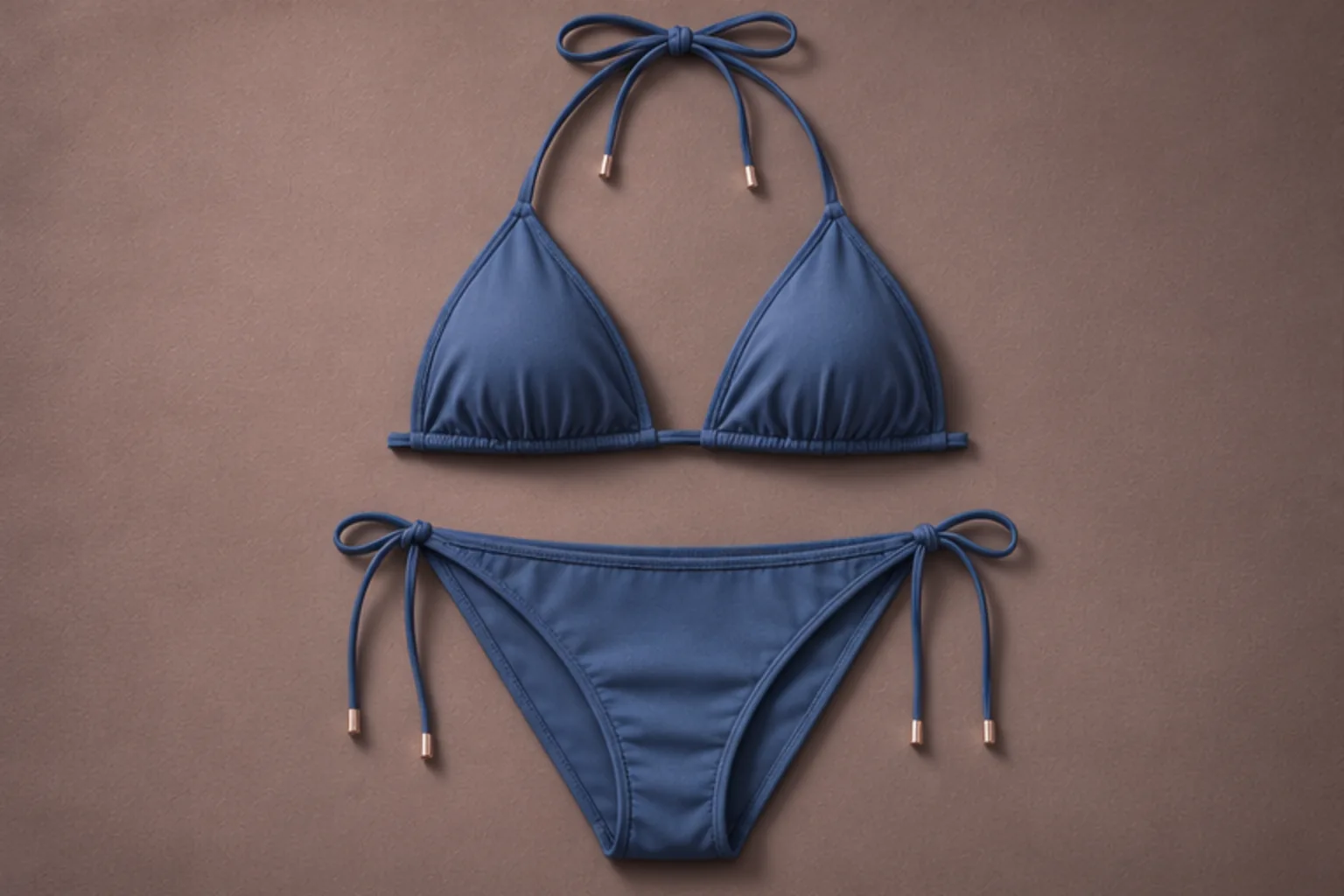
A top-down flat lay is a straightforward way to compare two-piece swimwear. Set the top and bottom apart, keep the whole outline inside the frame, and leave room for straps without letting them curl into the other piece. Use a matte background when you need to see the shape of the edges clearly. If you want a wearable lookbook later, start with a separate full-length beachwear brief and keep the focus on styling and garment fit.
Describe the details you want to keep
Describe the top and bottom independently. Specify strap width, top shape, rise, lining and trim where they matter, using the same fabric description for both halves. An ocean-blue ribbed two-piece with wide straps and a high-rise bottom is a clear direction for a product study. To compare variations, keep the camera, background and position fixed and change just the fabric colour or seam treatment. A diffuse shadow is usually enough to show the texture.
What to check in the result
Look for matching colour and weave, two physical straps with clear endpoints, and leg openings that follow one consistent cut. When a set is meant for a product listing, compare these details with a real sample you can verify. A convincing studio render cannot confirm sizing or show how the material behaves in water. Save the strongest layout, then make a second image of a different colourway using the same camera description to create a fair side-by-side comparison.
A starting prompt
Top-down e-commerce flat lay of an ocean-blue two-piece bikini, wide straps and high-rise bottom, opaque ribbed swim fabric, both pieces fully visible and separated, matte light-grey paper, one soft studio shadow, clean neutral product photography.
Change one detail at a time
Produce two colour studies with the top and bottom in the same positions. Keep the strap length and pattern of the swim fabric the same. Save the neutral-background versions side by side so the colour difference is clear. Use the design to choose what to develop next, then work from the actual garment for fit and sizing. Keep the camera and light consistent when you want to compare two designs.
Questions
- Can I use a reference image?
- Yes, when you switch to a model that accepts an image input. Use an image you have permission to use. For photos of people, use your own photo or one of a consenting adult whose age is clear. A reference can guide a pose or garment shape, but the result can still vary.