Choose a camera angle
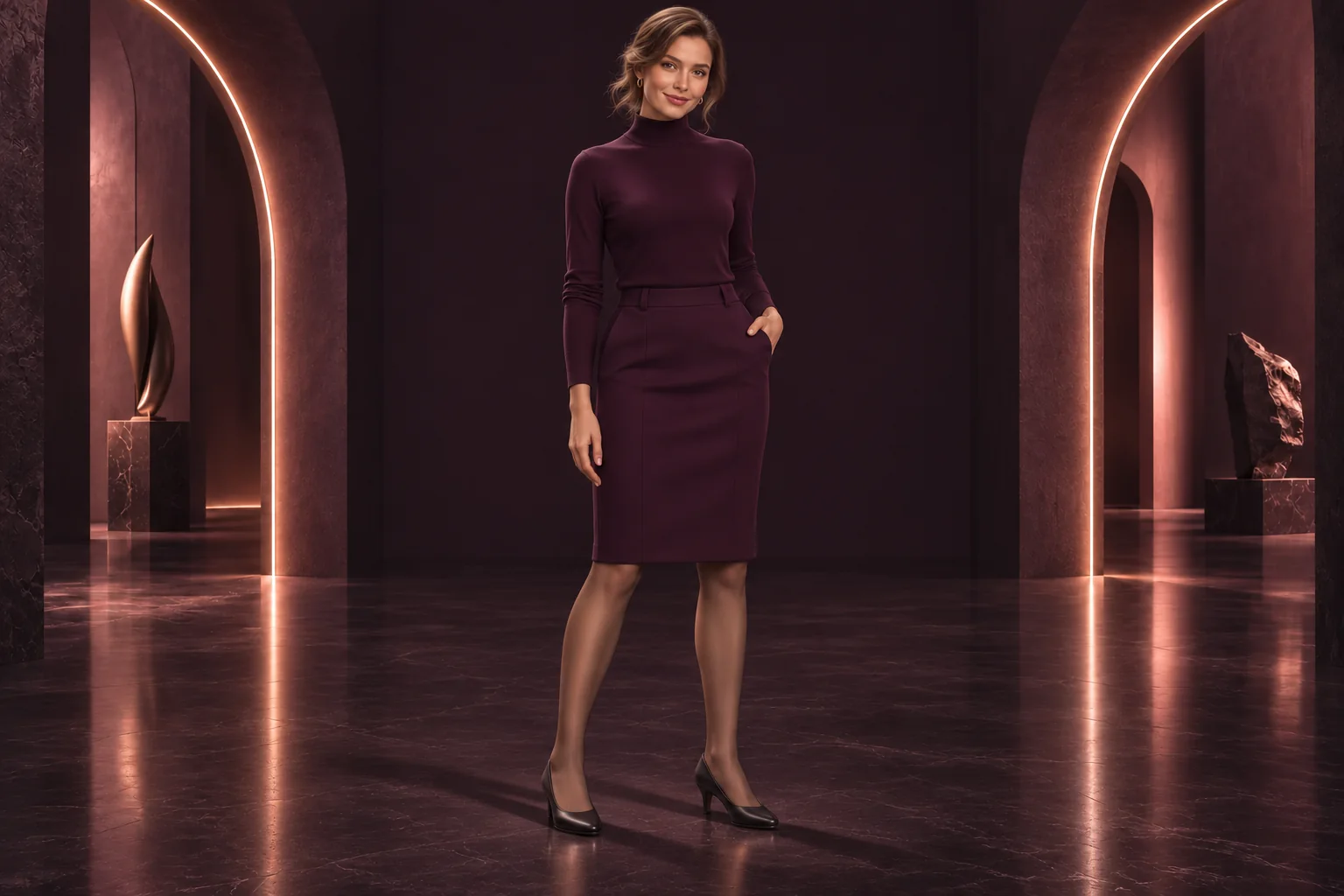
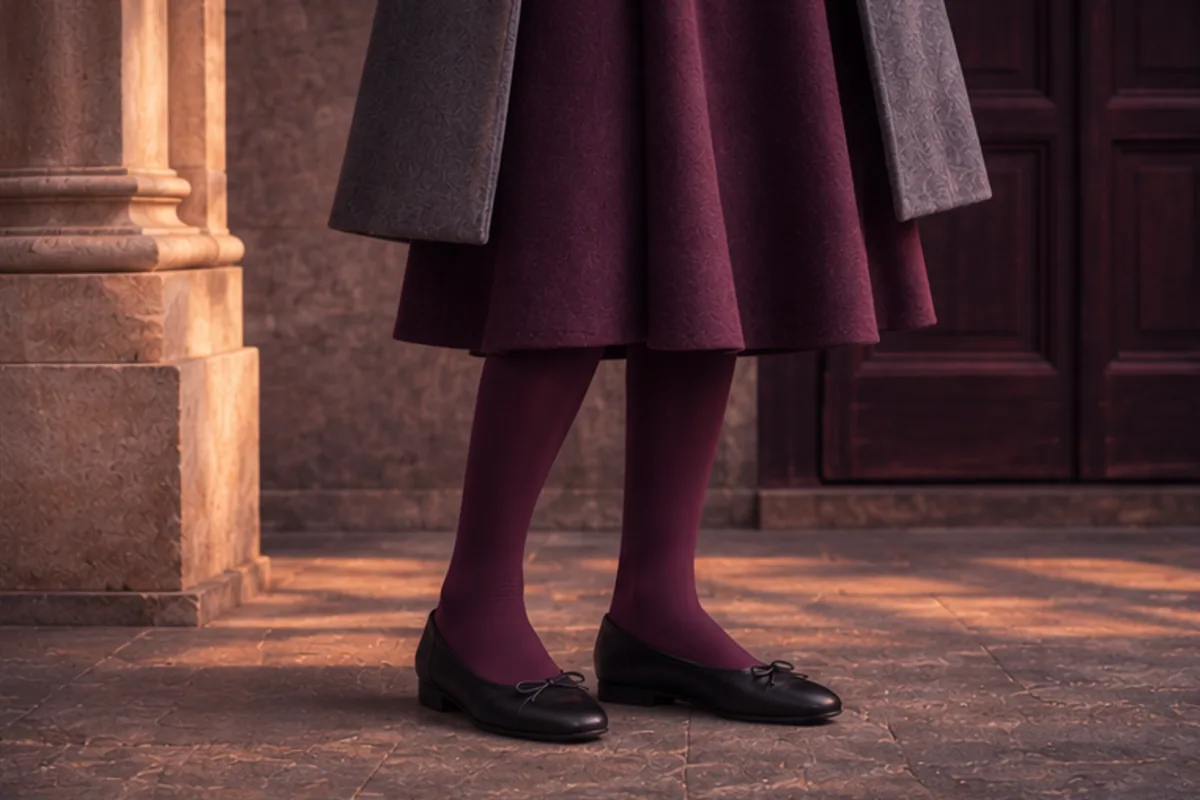
Choose a knee-down view when the weave or shoe pairing matters. Use a full outfit frame if the hem, coat and hosiery need to read together. A midi skirt with matte tights and flats gives a clear starting silhouette. Set the subject on a simple floor or a short step so both feet have a believable point of contact. A little space around the outline helps dark hosiery stay separate from a dark wall.
Describe the details you want to keep
Use material terms that have a visible effect: opaque, fine rib, matte knit or a subtle back seam. A denier number alone may be interpreted inconsistently, so pair it with a direct description of how much light passes through the fabric. Name the shoes and skirt separately to keep their textures distinct. For a consistent palette, say which item carries the main colour and give the remaining garments quieter tones.
What to check in the result
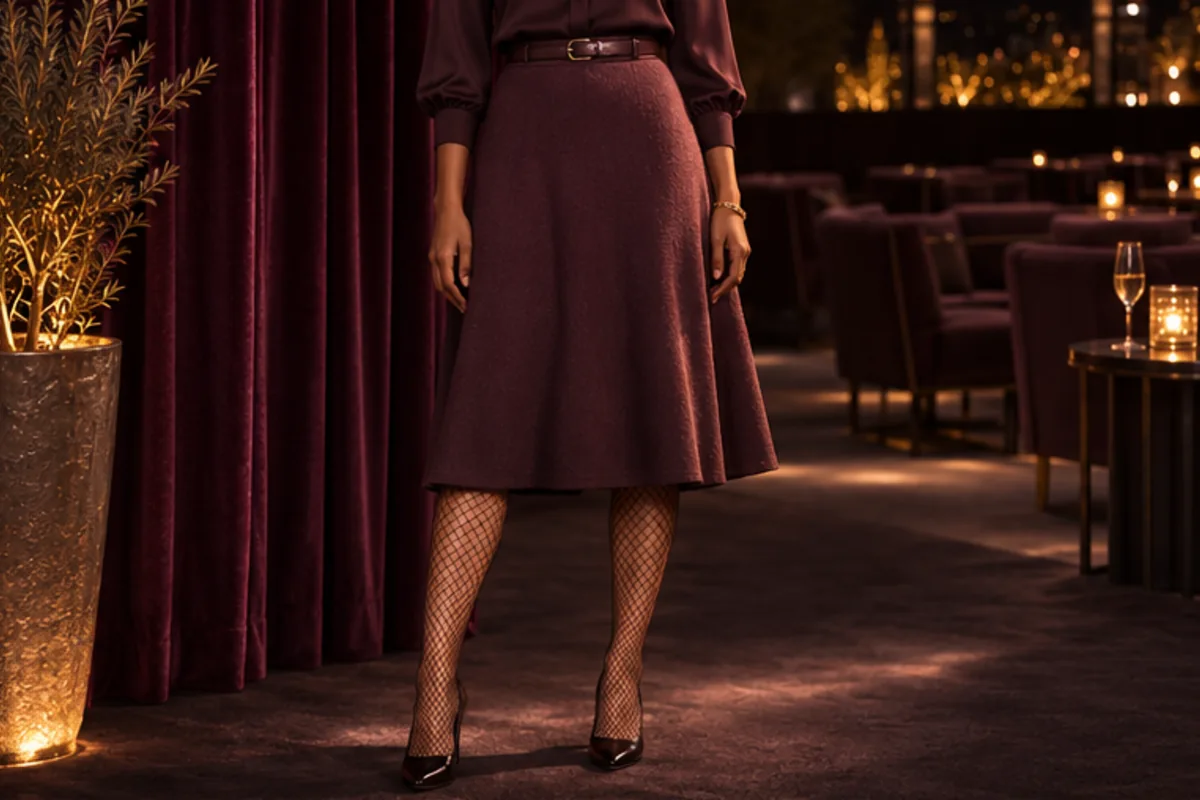
Inspect knees and ankles, where the weave is stretched and folds turn around the leg. Look for patterns that stop halfway down a calf, a seam that crosses into the shoe or an unexplained change of colour between legs. Check that both flats or boots touch the same surface. If you need to compare fabric treatments, use the same pose and lighting for each variation. Try one pattern per render before combining it with a patterned skirt or textured shoes.
A starting prompt
Tasteful cool-weather fashion editorial, knee-down crop of an adult wearing a midi skirt, opaque matte plum tights and black leather flats, soft stone entryway, diffused window light, both shoes in frame, natural folds at the ankles.
Change one detail at a time
To compare hosiery finishes, try the same outfit with a matte fabric and a subtle rib. Keep the colour, shoes and room the same so the finish remains the main difference. View each design first at full outfit size and then at the ankle. A texture that reads well close up may disappear in a full-length lookbook. Keep the camera and light consistent when you want to compare two designs.
Questions
- Can I use a reference image?
- Yes, when you switch to a model that accepts an image input. Use an image you have permission to use. For photos of people, use your own photo or one of a consenting adult whose age is clear. A reference can guide a pose or garment shape, but the result can still vary.